



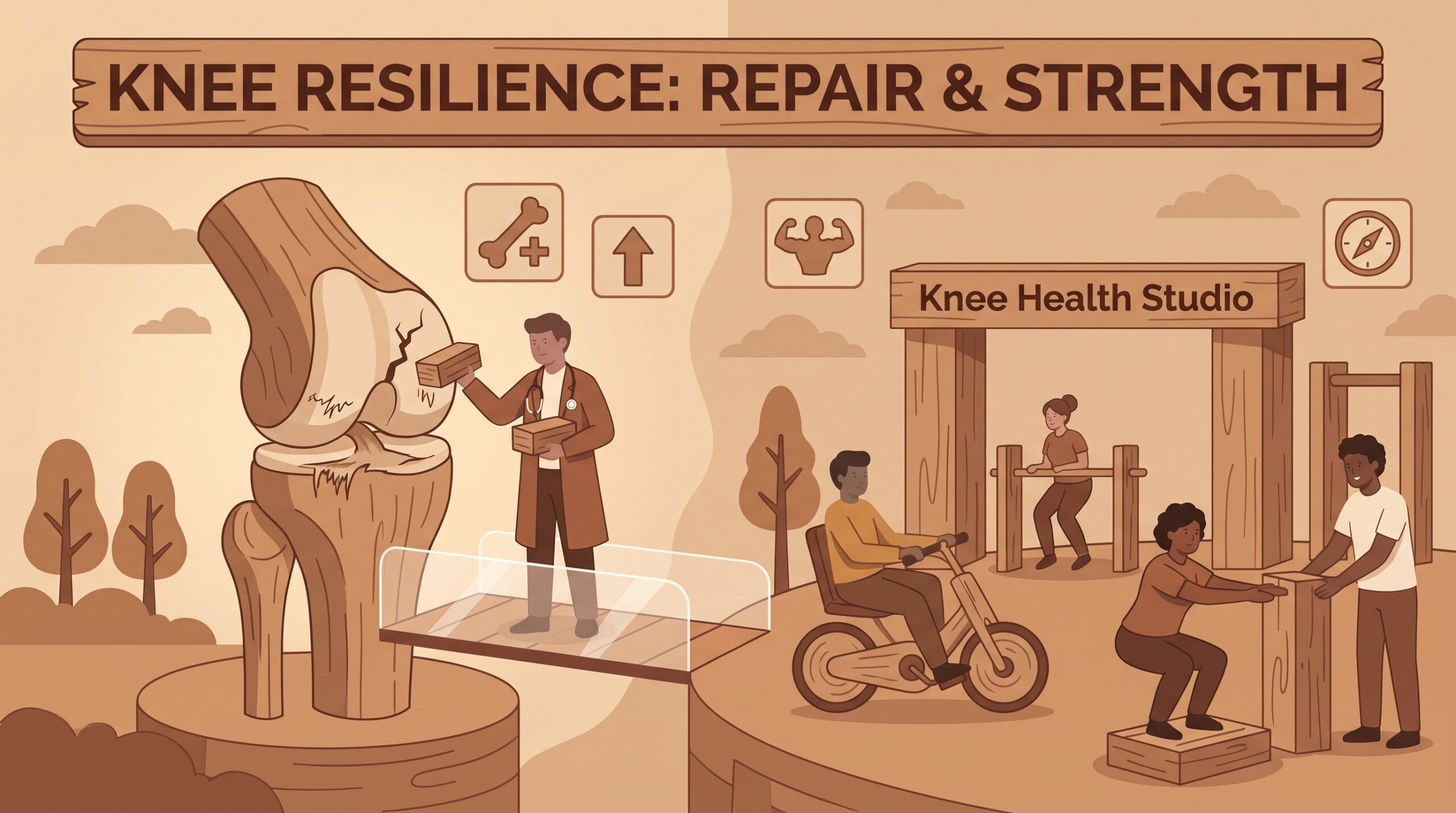
In Most Cases, It’s the Physio You Need
The Disconnect Between Scan Findings and Knee Pain Outcomes
One of the most common things we hear from people coming into the clinic with knee pain is this:
“I’ve been told I’ve got wear and tear in my knee and there’s nothing that can really be done.”
They may have had an X ray or an MRI scan. They may have seen their GP, a consultant or another healthcare professional. Somewhere along the way, they have been told that the joint is worn, arthritic or degenerative.
And very often, the way that message is delivered leaves people believing that their knee is effectively finished.
They think the pain is simply something they are going to have to live with.
They stop walking as much.
They avoid the gym.
They stop playing golf.
They become nervous about stairs.
Some people even stop doing things they enjoy because they think every time the knee hurts, they must be causing more damage.
That is the bit I really want to challenge.
Wear and tear in the knee is incredibly common, particularly as we get older. Seeing changes on a scan does not automatically mean that you are destined to live with pain, and it certainly does not mean that nothing can be done.
Wear and Tear on a Scan Does Not Tell the Whole Story
When people hear the words “wear and tear”, they understandably picture something physically wearing away.
It sounds permanent.
It sounds as though the joint has reached the end of its life.
But the relationship between what we see on a scan and how somebody actually feels is far more complicated than that.
Plenty of people have changes visible on scans but very little pain.
Equally, we can see people with relatively minor changes who are experiencing significant symptoms.
As we get older, changes within joints become increasingly common. In many cases, they are simply part of ageing.
The important thing is not just what the scan says.
The important thing is how your knee is actually functioning.
Can you bend it?
Can you straighten it?
Can you walk comfortably?
Can you climb stairs?
Can you exercise?
How strong is the knee?
What movements aggravate it?
What has changed recently?
Those questions tell us far more about what needs to happen next than simply reading the words “wear and tear” on a scan report.
What Does Wear and Tear in the Knee Actually Feel Like?
When somebody comes into our clinic with knee pain and they have already been told they have wear and tear, we do not just treat the scan.
We assess the person in front of us.
We want to know exactly where the pain is.
What movements bring it on?
How much movement do you have?
How strong is the knee?
Are the hips contributing?
Has anything changed in your activity recently?
Are there signs that something else may be causing the symptoms?
From there, we can build a treatment plan around what we actually find.
That might include hands on treatment where appropriate, exercises to improve strength and movement, changes to activity for a short period and then a gradual return to the things you want to be doing.
And one thing we are very clear about at Sharp Physiotherapy is that we do not want people coming back endlessly if treatment is not helping.
If you have had three treatments and there has been absolutely no meaningful improvement whatsoever, we would reassess what we are doing.
If we do not believe we are the right people to help you, we will tell you.
Sometimes that means changing the treatment plan.
Sometimes it means arranging further investigation.
Sometimes it means pointing you towards somebody else.
But simply telling somebody that they have wear and tear and therefore nothing can be done is not good enough.
There is usually a lot that can be explored before reaching that conclusion.
You Can Still Have a Very Active Life With Wear and Tear
This is probably the biggest message I want people to understand.
Having wear and tear does not mean you have to stop being active.
We regularly see people in their fifties, sixties and beyond who have degenerative changes in several joints and are still incredibly active.
Some run.
Some cycle.
Some play golf.
Some train in the gym.
Some are walking miles every week.
We have seen people running marathons despite having wear and tear identified in their knees and other joints.
The scan itself does not decide what you are capable of doing.
What matters is how well the joint is moving, how strong you are and how much load the knee can currently tolerate.
Treatment can involve improving movement, reducing sensitivity around the joint, restoring strength and gradually increasing what the knee can cope with.
That does not mean everybody needs months and months of treatment.
Quite often, we are simply trying to settle the symptoms enough to get somebody moving properly again.
Once things have improved, the long term goal is normally to keep you active rather than make you frightened of using your knee.
For some people, once the knee has settled, that is all they need.
Others find that having an occasional maintenance session every couple of months helps keep the knee moving well, particularly if they are very active or know that the symptoms tend to creep back.
There is no single plan that suits everybody.
The important thing is that you do not accept the idea that wear and tear automatically means pain forever.
The Right Treatment Can Make a Huge Difference
When somebody comes into our clinic with knee pain and they have already been told they have wear and tear, we do not just treat the scan.
We assess the person in front of us.
We want to know exactly where the pain is.
What movements bring it on?
How much movement do you have?
How strong is the knee?
Are the hips contributing?
Has anything changed in your activity recently?
Are there signs that something else may be causing the symptoms?
From there, we can build a treatment plan around what we actually find.
That might include hands on treatment where appropriate, exercises to improve strength and movement, changes to activity for a short period and then a gradual return to the things you want to be doing.
And one thing we are very clear about at Sharp Physiotherapy is that we do not want people coming back endlessly if treatment is not helping.
If you have had three treatments and there has been absolutely no meaningful improvement whatsoever, we would reassess what we are doing.
If we do not believe we are the right people to help you, we will tell you.
Sometimes that means changing the treatment plan.
Sometimes it means arranging further investigation.
Sometimes it means pointing you towards somebody else.
But simply telling somebody that they have wear and tear and therefore nothing can be done is not good enough.
There is usually a lot that can be explored before reaching that conclusion.
Call To Action
If you have been told you have wear and tear in your knee and you have started to think that pain is simply something you now have to put up with, a good starting point is just to have a conversation with us.
Book a free discovery call and tell us what has been happening.
Tell us what hurts, what you are struggling to do and what you would like to get back to.
There is no commitment to treatment.
We can simply have a chat about your symptoms and tell you whether we think physiotherapy is likely to help.
What have you got to lose?
And if you do start treatment with us, we will always be honest about whether you are making progress. If you have had three treatments and there has been no meaningful improvement, we will reassess rather than simply keep asking you to come back.
The goal is not to keep treating your knee forever.
The goal is to get you moving, get you confident in it again and help you get back to doing the things you enjoy.
Joe