


The Question Everyone Asks — With a Twist
Almost everyone who walks into my clinic with back pain asks the same thing: “Have I pulled a muscle? Is it a disc? Is it a trapped nerve?”
So let me give you the honest answer on whether it’s a disc, muscle or nerve — and there’s a twist in this one that explains why so many people stay in pain for years longer than they should. The full truth is you can’t be one hundred percent certain without a scan, an MRI. But from a good assessment, you can get a very strong idea. As always, this is a guide to help you understand what’s going on, not a diagnosis.
The Muscle — It’s Probably Not What You Think
Here’s the first thing that surprises people. Actually pulling, or tearing, a muscle in your back is very rare.
When people say “I’ve pulled a muscle in my back,” what they’ve usually got is a muscle spasm. And that’s a really important difference. A spasm isn’t damage — it’s the muscle clamping up tight. Hold onto that, because why it does that is the key to this whole thing.
The Nerve — It’s All About the Leg
Next, the nerve. The giveaway for nerve involvement is simple: does the pain travel down into your leg?
Pain, pins and needles, or numbness spreading into the buttock and down the leg is the sign a nerve is being irritated. And here’s the rule of thumb — if there’s no pain going down the leg, it’s usually not a nerve. When a nerve is involved, it tends to come together with the disc, in the lower back. That’s the usual pattern.
The Disc — Why They Go Together
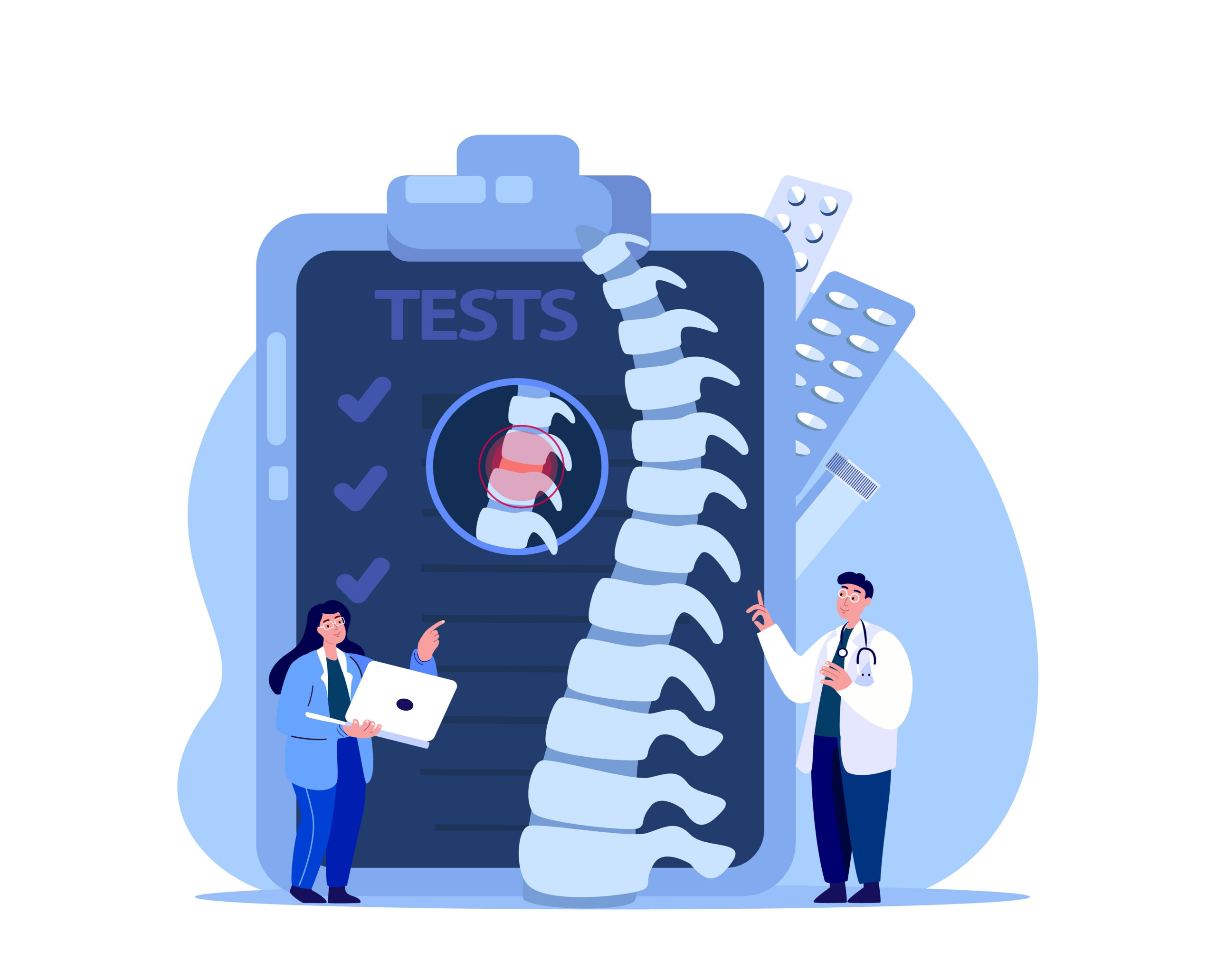
So why do the disc and the nerve go hand in hand? Picture the disc bulging or herniating. The nerves run right behind the disc, so when that disc bulges, it can press on or irritate the nerve. And that’s what sends the pain down the leg. The disc is the cause, the nerve is the messenger, and the leg is where you feel it.
Now here’s where it all comes together. Very often, you don’t get just one of these — you get all three. The disc bulges. It presses the nerve, so you get leg pain. And then the body panics a bit, and the muscles around it go into spasm to protect the area. So that “pulled muscle” feeling, the disc, and the nerve are often all part of the same single problem, happening at the same time.
The Twist — Why It Keeps People in Pain for Years
Now this is the bit I really want you to hear, because it’s the part that keeps people in pain for years. That muscle spasm is protective — it clamps down to stop you moving the injured area, to guard the disc.
And here’s the problem. If you just leave it, rest it, and wait, the disc itself will usually heal. It settles, it scars over, it gets better on its own. But the muscle spasm doesn’t always switch off when the injury heals. The disc is better, the nerve’s no longer irritated — but the muscles never got the message. They stay tight. They stay in spasm. And that’s why so many people have back pain for years and years. It’s not that the original injury never healed. It’s that the protective spasm never let go.
There’s even one more sting in the tail. Those tight muscles can actually mimic nerve pain themselves. A tight muscle deep in the buttock, like the piriformis, can refer pain down the leg all on its own, even after the disc and nerve have completely settled. So you end up with leg pain, convinced the disc is still going, when really it’s a tight muscle that never released.
So here’s the takeaway. Just resting and hoping isn’t the full answer. Yes, the disc heals on its own — but the muscle spasm often doesn’t, and that’s the bit left driving your pain. That’s exactly where the right hands-on treatment and rehab come in: releasing that spasm and getting the muscles to let go, so you don’t end up stuck in pain for years over an injury that technically healed a long time ago. So is it a disc, a muscle, or a nerve? Honestly, very often it’s all three at once. No leg pain? Probably not the nerve. Pain down the leg? That’s nerve, and usually the disc behind it. And that “muscle” feeling is nearly always a protective spasm. The disc heals — the spasm is the one that lingers, and sorting it is where lasting relief comes from.
Joe Sharp
BSc (Hons) Physiotherapy
Request A Free Discovery Call & Ask All The Questions You Need