


Kind Of — But the Nerve Doesn’t Actually Get “Pinched”
Is sciatica a pinched nerve? It’s one of the questions I get asked most — and the answer is, kind of. But here’s the thing I really want you to understand: the nerve doesn’t actually get pinched.
“Pinched” isn’t really the right word. Nerves don’t get pinched like you’d pinch a piece of skin. What actually happens is the nerve gets irritated, or compressed, or tethered — where the tissue around it tightens up and restricts how freely it can move. And this matters more than it might sound, because the language shapes how people think about the problem, and how they think about it shapes whether they recover properly or not.
Why the Word “Pinched” Causes Problems
People hear “pinched nerve” and picture something being physically clamped. And that mental image leads them to think it needs to be “untrapped” or “clicked back into place.” That’s where a lot of bad treatment decisions start — chasing a dramatic fix for something that isn’t actually being crushed.
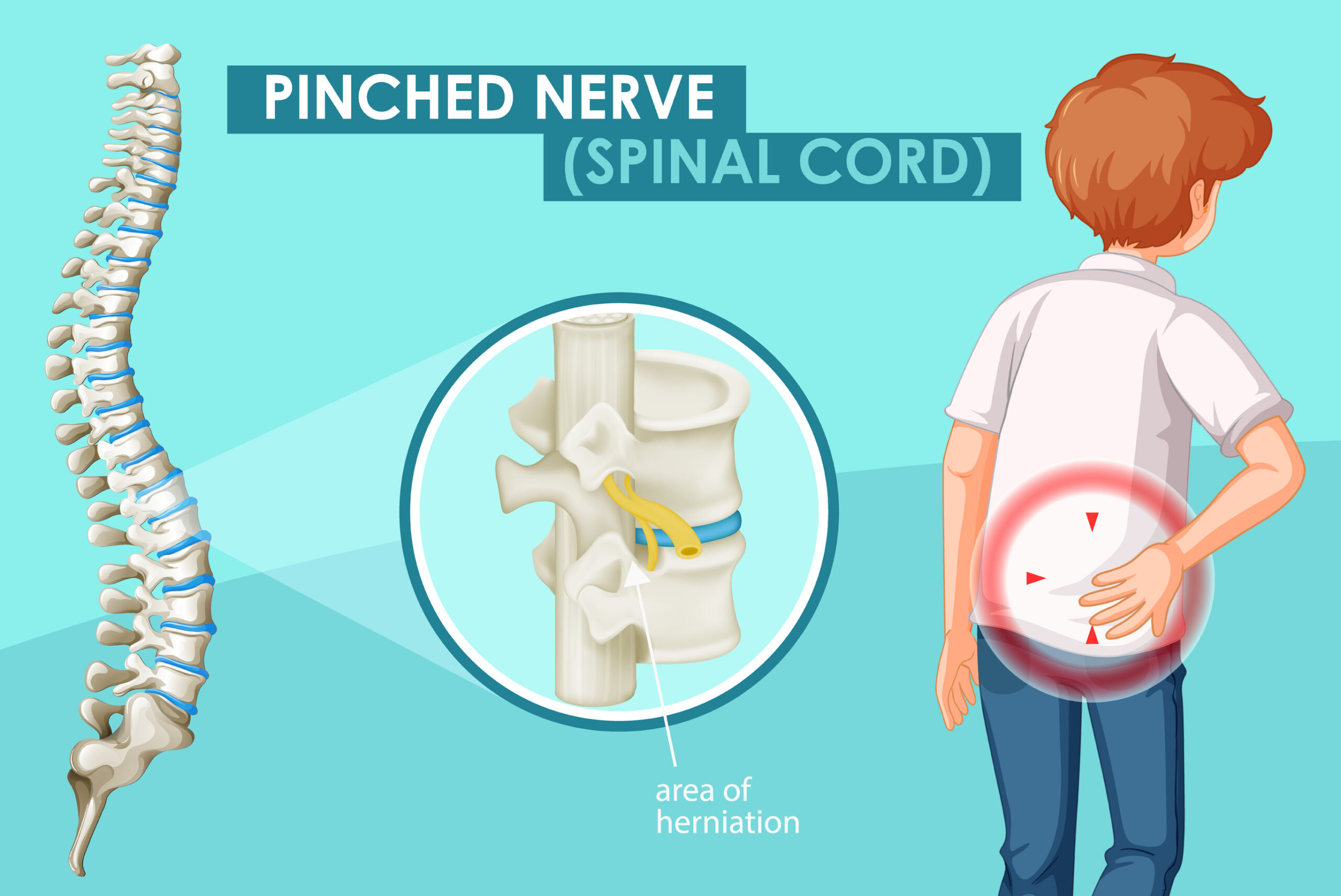
So understanding what’s really happening to that nerve changes everything about how you approach fixing it. When someone says pinched nerve, what they really mean is that a nerve somewhere along its pathway is being irritated or compressed by the tissue around it. That’s it. No actual pinching — just pressure, friction, or restriction on the nerve, which then fires pain signals along its entire length.
Where Along the Pathway It Happens
With sciatica specifically, that pathway is long. The sciatic nerve starts at the spine in your lower back, travels through the buttock, runs through the hamstring, and goes all the way down into the foot. And the nerve can be irritated or compressed at any point along that entire route.
At the spine, a disc can bulge and press on the nerve root as it exits. In the buttock, a muscle called the piriformis can tighten around it. Through the hamstring, scar tissue or tightness can tether it and stop it moving freely. It can even be further down, into the calf and foot.
Why This Changes Everything About Treatment
Here’s where it gets important. Two people can both be told they have sciatica, both have that shooting, burning pain down the leg — and the compression can be happening in completely different places.
So the treatment has to match the source. Because what relieves compression at the spine does nothing for compression in the buttock. What releases a tethered nerve in the hamstring is completely different to treating a disc. Same label, completely different problem, completely different solution. This is exactly why a “sciatica pinched nerve” label on its own isn’t enough to treat from — you have to know where along the pathway the trouble actually is.
So, Is It the Same Thing?
So to answer the question directly: sciatica is what we call the pain the sciatic nerve produces when it’s being irritated, compressed, or tethered somewhere along its pathway. A pinched nerve is just the common term people use for that same process. Same thing — one of them is just actually accurate.
The takeaway is simple. Don’t get too caught up in the word “pinched,” and don’t assume it means something has to be forced back into place. It means the nerve is being irritated somewhere along its route — and the real job is working out where, and why, so the treatment can be aimed at the actual source rather than the label.
Joe Sharp
BSc (Hons) Physiotherapy
Request A Free Discovery Call & Ask All The Questions You Need