
Nine Months Is the Anchor — But It’s Criteria, Not Calendar
Nine months. That’s the number. That’s your target from ACL surgery back to full sport. For some people it’ll be a bit quicker — seven to seven and a half months — and for others slightly longer. But nine months is the anchor to hold in your head.
What matters far more than the number, though, is understanding the ACL recovery timeline itself — what happens in every single phase to get you there, and what we’re looking for at each stage before moving you forward. Because here’s the thing that changes how you should think about the whole process: this isn’t a calendar recovery, it’s a criteria recovery. The phases don’t unlock with time — they unlock when your knee is ready. Let me walk you through what that actually looks like, phase by phase.
Phase 1 — Weeks 0 to 2: Protect the Surgery
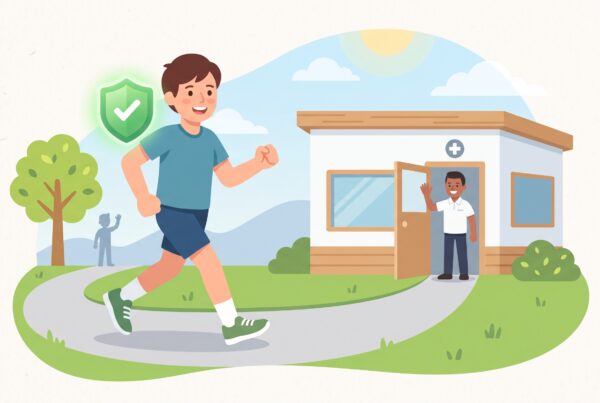
The surgery is done, the graft is in, and right now your one and only job is to let it heal without complication. The overriding goal in this phase is simply to avoid infection.
Your wounds will be covered and dressed, and you’ll keep a close eye on them. Swelling control is everything in this period — ice, elevation, compression, and sometimes a Game Ready machine to really drive that swelling down.
You’re not doing nothing, though. We’ll get you doing some basic exercises — gentle quad sets, ankle pumps, straight leg raises — just to get the quad firing and stop it switching off completely, and we want some basic range of movement starting to return. But the headline for weeks zero to two is simple: protect the surgery, and let it heal.
Phase 2 — Weeks 2 to 6: The Most Important Phase
I’ll be honest with you — for me, this is one of the most important phases in the entire ACL recovery timeline. What happens here sets the tone for everything that follows. The focus shifts to three things.
The first is getting the quad firing. The quad switches off after ACL surgery — it’s a neurological response to the trauma — so our job here is to wake it back up through quad activation and progressive loading, rebuilding that connection.
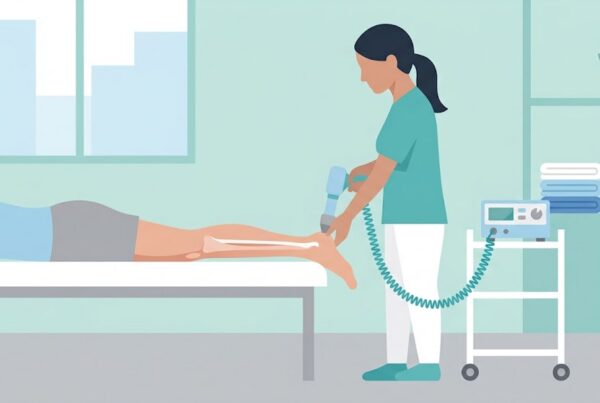
The second is clearing the post-surgical swelling. We use a lot of manual therapy in this phase — hands-on work into the knee to help absorb and disperse that residual swelling. If you carry swelling forward, it limits everything that comes after.
The third is getting full range of movement back, with progressive bend work. Towards the end of this phase, once the range is returning, we start introducing some bike work, and we layer in glute and calf work as the knee responds. By the end of week six, we want to see the knee straightening beautifully and a solid bend coming back. Hit those two things and you’re in great shape for what’s next.
Phase 3 — Weeks 6 to 12: The Hard Work Starts
This is where the real work begins. You’re now in the gym doing the bigger compound movements — squats, step-ups, progressive loading on the leg. We’re building genuine strength through this phase, not just waking things up but developing it properly.
Around weeks ten to eleven, we introduce jumping. We start double-leg, with both feet, and progressively move towards single-leg work as strength and confidence build. The aim is that by around week twelve to fourteen, your knee is in good enough condition to start straight-line running.
Phase 4 — Weeks 12 to 20: Running and Agility
Once straight-line running starts, we don’t just leave you there — we progress it, building speed, distance and intensity, with acceleration and deceleration work. Running sits alongside a more advanced strength and conditioning programme at this point — advanced plyometric drills, power work and single-leg loading.
By around week sixteen, we start introducing turns, gradually progressing how sharp they are. By the end of this phase you’re twisting, turning, doing light ball work and getting involved in more advanced sport-specific drills. From month five onwards, we also bring in isokinetic testing — a proper strength test of the knee to make sure the surgical leg is within around 10% of the other side. That’s one of our key exit criteria before the next phase.
Phase 5 — Month 6 to 9: Back to Sport
Once all your exit criteria are achieved — strength, movement, agility and confidence — we look to reintroduce you into non-contact training. For most people that’s around month six. From there, we phase you back into contact sport progressively. For some people that happens around seven to seven and a half months; for most, you’re looking at month nine.
And that’s really the whole point of following the ACL recovery timeline properly. The goal isn’t just getting back — it’s getting back right: strong, confident, and with a knee that’s been tested and proven at every single stage. Six phases, clear criteria at every step, and a number — nine months — to aim for. Hit the criteria along the way, and you give yourself the best possible chance of a full, lasting return.
Joe Sharp
BSc (Hons) Physiotherapy
Request A Free Discovery Call & Ask All The Questions You Need