



Why the Right Exercises Matter More Than Just Doing Exercises
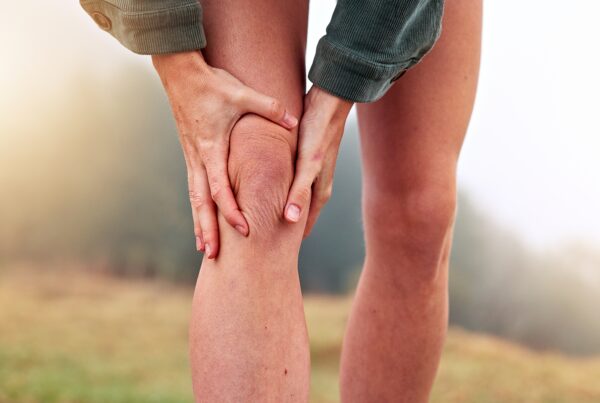
If going downstairs has become the worst part of your day because of a sharp, nagging pain behind the kneecap, you’ve probably already tried a few things to fix it. The frustrating part is that a lot of the usual runner’s knee exercises don’t help — and some can actually make it worse.
In this article I’ll show you three runner’s knee exercises that genuinely work, because each one targets a different cause of the problem: the foot, the knee, and the hip. This is the follow-up to my piece on what causes runner’s knee, where I explained that the root issue is a kneecap that isn’t tracking properly in its groove. If you haven’t read that yet, it’s worth doing first, because it helps you work out which part of the chain is actually driving your pain.
That last point is the whole game. The aim isn’t to do every exercise going — it’s to do the right exercise for your weak link. So as you go through these three, think about which one matches the cause that applies to you.
Exercise 1 — The Foot: Calf Raise With a Ball Squeeze
The first exercise targets the foot and ankle, and specifically a muscle called tibialis posterior. It runs down the back of the shin and wraps under the foot, and it’s the main muscle that controls your arch and stops the foot collapsing inward when you run.
When tibialis posterior is weak, the foot pronates — it rolls in — and that sets off a chain reaction up the leg. The shin rotates inward, the thigh bone follows, and the kneecap gets dragged off track. If foot pronation is your issue, this is the exercise you need.
It’s a calf raise, but with one important addition: a small ball squeezed between your ankles as you rise up. That squeeze is what switches on tibialis posterior and the arch. Without it, most people just go through a standard calf raise and miss the arch-control benefit entirely. The ball is the cue that makes the whole thing work.
How to do it:
-
Stand with your feet hip-width apart and a small ball between your ankles.
-
Squeeze the ball gently — just enough to feel the arch and inner ankle engage, not aggressively.
-
Slowly raise up onto your toes, keeping the squeeze the whole way.
-
Hold at the top for a second, then lower slowly under control.
-
Don’t let the arch collapse as you come back down — control on the way down is where the work happens.
Aim for three sets of fifteen. Slow and controlled beats fast every single time on this one.
Exercise 2 — The Knee: Terminal Knee Extension for the VMO
Not everyone with runner’s knee has a foot problem. For plenty of people the issue is at the knee itself — and that usually comes back to the VMO.
The VMO is the teardrop-shaped muscle on the inner side of your quad, just above the kneecap. It’s one of the main muscles responsible for pulling the kneecap inward and keeping it centred in its groove. When it’s weak or not firing properly, the kneecap drifts and the pain starts.
Here’s the key thing, and it’s why so many quad exercises fail runners: a full squat or a leg press compresses the kneecap hard into the groove through a big range of movement, which is the last thing an irritated knee needs. That’s often why people feel worse, not better, after “doing their exercises.”
Terminal knee extension is different. It targets the VMO in the last 20 to 30 degrees of straightening — exactly the range it needs to fire during running — and it does it with very little compression through the joint.
How to do it:
-
Loop a resistance band around something solid at knee height and step into it so the band sits behind your knee.
-
Stand facing away from the anchor with a slight bend in the knee, feet hip-width apart.
-
From that slightly bent position, straighten the knee fully against the band, squeezing the quad hard at the end.
-
Slowly let the knee bend back to the start.
-
Keep the movement small and precise — this isn’t a squat, it’s a controlled contraction at the end of the range.
Three sets of fifteen. Focus on feeling that inner quad fire as you straighten — if you can’t feel it, rest a hand on the VMO for feedback.
Exercise 3 — The Hip: Banded Single-Leg Stand
The third exercise targets the hip, and for a lot of runners this is the biggest driver of runner’s knee — and the most overlooked.
We’re working the glute med here, the muscle on the side of the hip that controls the thigh bone and stops the knee dropping inward when you run. If your glutes are weak, the femur drops and rotates in with each stride, and again the kneecap gets pulled off track. This exercise replicates exactly what needs to happen every step — standing on one leg while the glute holds everything in line.
How to do it:
-
Place a resistance band just above both knees.
-
Stand on the affected leg with a soft bend in the knee — not locked, not deeply bent.
-
Keep your hips level and the standing knee tracking over your second toe, not caving inward.
-
Slowly lift the other leg out to the side against the band, keeping the standing leg stable.
-
Hold for a second at the top, then lower slowly.
The work is happening in the standing leg as much as the lifting leg — that’s the whole point. Watch for the hip dropping on the standing side or the knee caving in. If either happens, the glute isn’t holding, so reduce the band resistance, slow down, and nail the control before adding load.
Three sets of twelve each side. Quality over everything.
How to Know Which Runner’s Knee Exercises You Actually Need
If you remember nothing else from this article, remember this. If you’ve been told you need a knee replacement, ask — or find out — whether the arthritis is in one compartment or across the whole joint. That single piece of information shapes everything that follows.
If it’s confined to one compartment, ask your surgeon directly about an osteotomy or a half knee replacement, and whether either is an option for you. And if you’re not getting a clear answer, get a second opinion. You owe it to yourself to understand all the options before you commit to the biggest one — because this is a decision that affects the rest of your life, and a joint you can’t get back.
One last thing worth saying: before any of this, make sure you’ve given proper physiotherapy and injection therapy a genuine go first. For a lot of people, the right conservative treatment can keep an arthritic knee comfortable and active for years before surgery of any kind needs to enter the conversation. Surgery — of any size — is best thought of as a tool for when those options have been properly explored.
Every knee and every person is different, so the right answer can only really come from a proper, individual assessment. But going into that conversation knowing the three options, and knowing to ask which compartment is affected, puts you in a far stronger position. So if you’ve been told you need a full knee replacement, make sure you’ve asked the one question that could change everything — before you commit to the biggest operation of all.
Joe Sharp
BSc (Hons) Physiotherapy
Request A Free Discovery Call & Ask All The Questions You Need