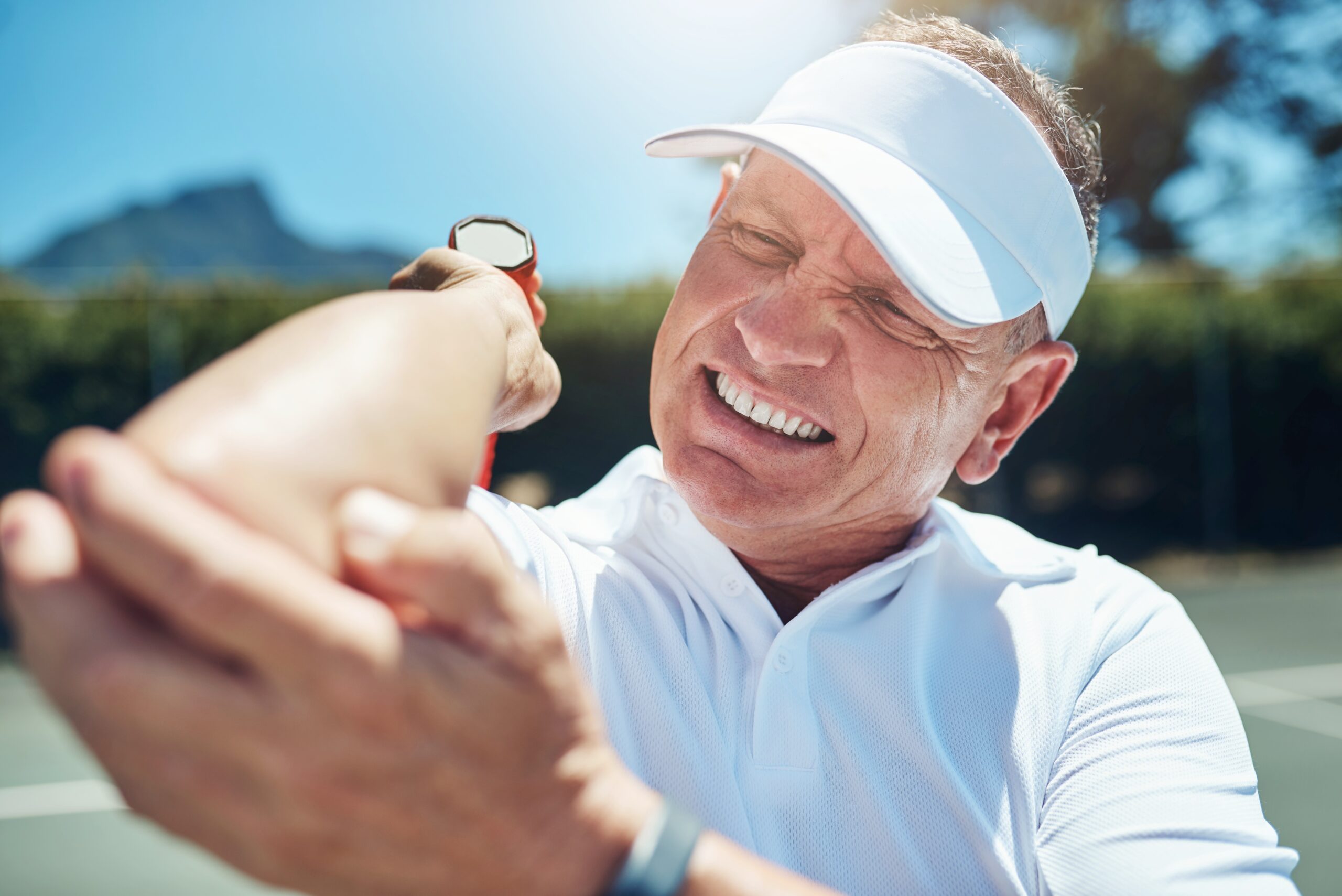
He wasn’t trying to be the next Federer. He just loved the game.
At 57, tennis was his thing. After long days at work, the court gave him space to move, de-stress and forget about everything else for an hour. He had a weekly lesson, he played socially with friends, and though he freely admitted he wasn’t winning many trophies, it didn’t matter. He just enjoyed it.
Until his elbow started to ache.
At first it was just a niggle. Nothing major. A bit of stiffness after a match. But slowly, it became something more. The pain started to flare up when he gripped the racket. It felt weaker than usual. Everyday things like lifting a mug or turning a door handle began to hurt. The outside of his elbow had a constant dull ache that was starting to wear him down.
He remembered when it started. A few months ago, he’d changed his racket. The new one was thicker, a bit heavier. Looking back, he felt that was what set it off. He had already been to see his GP and a local physio, and they gave him exercises to try. But they didn’t help. If anything, they made the pain worse.
He kept playing tennis, but it just wasn’t enjoyable anymore. His shots were off. His arm was sore. He was starting to think he might have to give it up.
That’s when he came to see us.
What We Found
The moment we heard his story and examined his arm, the diagnosis was clear. Classic tennis elbow.
It’s a condition we see a lot. The tendon on the outside of the elbow becomes inflamed and overloaded, often from repetitive strain. In his case, changing to a heavier racket likely tipped it over the edge. His forearm had lost strength. The tendon was swollen and sensitive.
He was frustrated, and rightly so. He had been trying to do all the right things. He was motivated. He wanted to stay active. But what he really needed was a treatment that would kick-start healing again.
That’s when we talked to him about shockwave therapy.
A Better Option for Stubborn Elbow Pain
Shockwave therapy sounds more dramatic than it is. It is a really clever, non-invasive treatment where we use a handheld device to send high-pressure sound waves into the injured area. These waves stimulate blood flow and restart the healing process in tendons that have been stuck and not healing properly.
It works particularly well for chronic or stubborn injuries. Especially tendon issues like tennis elbow.
We explained that the ideal plan would be six sessions, spaced no more than a week apart. This is because the treatment works best when it builds momentum. After six sessions, most people see significant improvement. And because the effects continue building for weeks afterwards, many report their best results around three months after finishing treatment.
He was keen to get started.
The Turnaround
After just one session, he told us his elbow already felt a bit better. That was a good sign. As the weeks went on, things kept improving.
He continued playing tennis during his treatment, but with a bit more care. We gave him some advice on grip size and a few simple things to help him reduce strain during matches. By his sixth session, he reported he was about ninety percent better. The pain was barely noticeable. His grip strength had returned, and tennis felt fun again.
A month after his final session, we followed up with him. He told us the pain was completely gone.

What You Should Know
If you are getting pain on the outside of your elbow and it has been there for more than a few weeks, it might be more than just a strain. You could be dealing with tennis elbow, even if you do not play tennis at all.
And if you have already tried exercises that just seem to make it worse, you are not alone. Many of the people we help have spent months doing online rehab programs or bouncing between clinics. In some cases, the tendon starts as a mild inflammation and, over time, can develop small tears. That makes it much harder to treat.
That is why it is so important to act early and to get the right diagnosis and the right treatment.
Shockwave therapy is not always the first option people think of. But it is one of the most effective tools we have for treating chronic tennis elbow. And the earlier you get the right support, the quicker your recovery can be.
So if you are still in pain, and exercises are not helping, let us take a look. Even if you are not sure if it is tennis elbow or something else, it is worth a proper assessment.
We are here to help you get back to doing what you love. Even if your backhand still needs work.
Joe Sharp
BSc (Hons) Physiotherapy
Request A Free Discovery Call & Ask All The Questions You Need